
Every Fortune 500 brand we worked with over the past eight years walked in with the same problem. They had marketing budget. They had brand recognition. They had distribution. And they were getting older every quarter while their next customer was somewhere they didn't know how to reach.
Legacy media (TV, radio, billboards, print) was no longer where the 18-30 audience lived. Social was fragmented. Influencer marketing was getting expensive and unreliable. And the brands that had built their entire growth engine on Super Bowl spots and out-of-home placements were quietly watching their younger-demographic numbers slip.
Here's what we learned about closing that gap, with real names and real numbers.
The first test: Totino's Pizza Rolls
Totino's was our first major corporate entry into the gaming space. They had the classic problem: an aging customer base, a beloved-but-dated product, and no obvious way to reach 18-24-year-olds without burning budget on platforms where they already weren't trusted.
We built the activation around our investment partners (the Pittsburgh Steelers) and a crossover format that bridged football fandom with gaming. The thing that made it work wasn't the size of the activation. It was that Totino's showed up where the audience was already gathering, in a context that felt native to that audience, with a co-branded experience that didn't try to "be cool."
That single activation reframed how we sold every subsequent corporate engagement. We weren't selling gaming. We were selling access to a demographic via a channel they actually trusted.
Scaling up: McDonald's, eBay, Sheetz, Zenni, Zippo
After Totino's, the corporate brands lined up. McDonald's, eBay, Sheetz, Zenni, Zippo all had older customer bases and the same urgent need to reach younger demographics, both locally in Pittsburgh and digitally across their national footprints.
The framework we used with each one was the same:
- Find the channel they were already missing. Not a platform they "should be on" generically. The specific platform where their target demographic was making decisions and sharing recommendations.
- Build an experience worth talking about. Sponsorship logos on a banner don't do this. A $100,000 pinball prize at a real convention does.
- Make the brand native to the moment. Don't force "brand voice" into a context where it feels like an outsider. Let the channel shape the activation, not the other way around.
- Build the digital infrastructure to recapture attention later. Single events fade. The Discord servers, YouTube clips, and on-demand recordings keep working for months.
The eBay case: ReplayFX + a $100,000 pinball prize
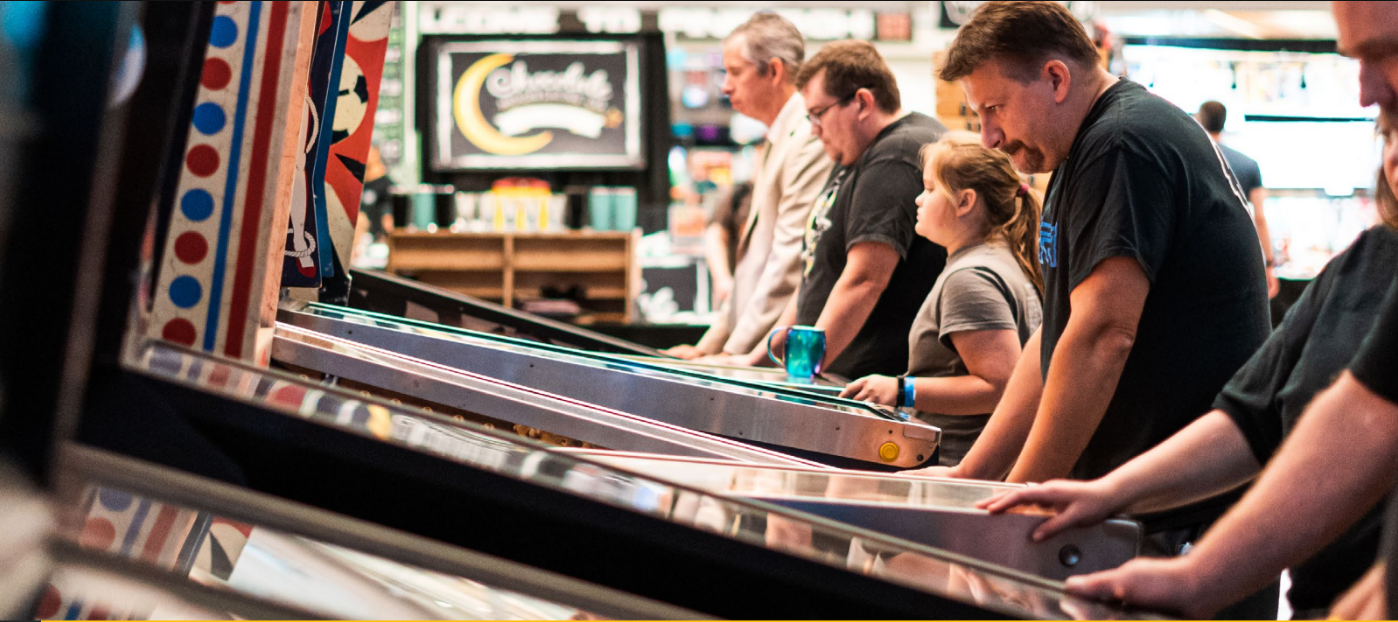
The clearest example was the eBay activation at ReplayFX, one of the largest pinball-and-gaming conventions in the Northeast, held at the Pittsburgh convention center.
eBay's older shopper base was well established. Their growth opportunity was the younger collector market, particularly across retro gaming, vintage tech, and pinball, all categories where eBay was the dominant marketplace but the brand wasn't always front-of-mind.
We anchored their presence with a $100,000 sponsored prize for the pinball tournament. That single move did three things at once: it gave the convention a flagship sponsor moment, it gave eBay a credible reason to be in the space (rather than a logo on a banner), and it produced enough media coverage to extend the activation's reach well beyond the building.
When COVID hit and live conventions paused, eBay's activation didn't die. We transitioned the relationship into digital broadcasts. Same audience, different venue. eBay sponsored the streamed tournament series we built, and the audience that had attended in person became a digital audience we could reach over and over without flying anyone to Pittsburgh.
Why the conversion math worked
The reason corporate brands kept coming back wasn't novelty. It was conversion. Three structural reasons:
The audience had real spending power. The "gamer demographic" stereotype is wildly out of date. The 18-30 gaming-adjacent audience we built infrastructure around had higher disposable income than equivalent-age cohorts on TikTok or Instagram. They weren't just younger. They were higher-LTV per impression.
They had higher technological expertise. Which meant when a brand activation involved a digital sign-up, a Discord community, a Twitch follow, or an on-platform purchase, this audience completed those flows at 2-3x the rate of legacy-media audiences. The funnel from "brand impression" to "captured contact" was dramatically shorter.
They were in the right channels. The biggest waste in legacy corporate marketing is paying for impressions in places the target customer doesn't live. By the time we were activating for McDonald's or eBay, our infrastructure (gaming events, esports broadcasts, Twitch sponsorships, Discord communities) was tuned to channels with a heavy concentration of the exact demographic those brands needed.
When channel, audience, and experience line up, the conversion math takes care of itself. When any one of those three is off, no amount of creative or budget can fix it.
The Discord layer
The single most underrated move we made during this period was treating Discord as a primary brand-activation surface, not a Slack-style afterthought.
Discord at the time was the default home of young gamers, with persistent communities organized by interest, geography, and game. For corporate brands trying to reach a fragmented audience, Discord offered something almost no other platform did: a real community that opted in, where activations could be hosted, moderated, and measured over time.
We built a framework where corporate activations didn't end at the event. They lived on inside Discord servers, with co-branded channels, structured giveaways, follow-up content, and an opt-in audience that the brand could activate again later. That single piece of infrastructure took a one-time activation and turned it into a relationship.
The brands that understood this came back. The ones that wanted "just the event" got a one-time hit and moved on. The ones that took the Discord layer seriously built a younger-demographic audience asset they kept compounding.
What every legacy brand (and every service business) can steal from this
The principle is bigger than gaming. The same moves apply if you're a Pittsburgh law firm trying to reach 25-35 professionals, a home services company trying to reach 28-40 homeowners, or a regional restaurant group trying to reach Gen Z.
Identify the channel your target audience already trusts. Don't pick a platform based on where you're comfortable. Pick the one where the audience is making decisions.
Build experiences, not impressions. A specific, on-context moment outperforms a generic logo placement by an order of magnitude.
Build the recapture infrastructure on day one. Email list. Discord/community channel. Retargeting pixel. Newsletter. The activation feeds the asset, and the asset compounds.
Let the channel shape the activation. Don't force your brand voice. Let your brand visit the audience's world.
Most corporate marketing in 2026 still treats "younger audiences" as one undifferentiated blob and tries to reach them with the equivalent of a louder billboard. The brands that figured it out years ago were the ones willing to go specific, go local, build infrastructure, and treat the activation as the start of the relationship rather than the end of the campaign.
Eight years later, those moves are still the moves.